

Thich Nhat Hanh, the Zen grasp, activist and poet who taught mindfulness to individuals from all around the world after being exiled from his house nation Vietnam, handed away on January 22, 2022, on the age of 95. After per week of memorial ceremonies in Vietnam, France and the USA, his casket made its journey to the cremation grounds on January 29, to the accompaniment of texts, poems and songs provided by his senior monastic disciples.
The person, who was respectfully addressed as “Thay” (which means ‘trainer’), is the creator of over 100 books. Whereas he's usually cited as an authoritative voice on mindfulness and Engaged Buddhism, Thay additionally wrote about love, intimacy, relationships, and sexuality. His reflections on these topics are refreshing, and advantage the eye of all who're interested by a non secular observe that engages with the quotidian issues of samsaric life.
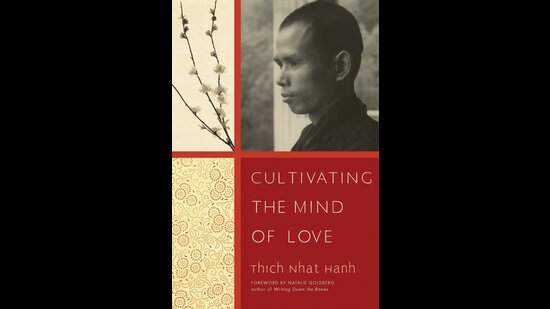
(2009) is a wondrous guide, removed from what you would possibly anticipate from a monk. He opens up in regards to the time when he was 24, and fell desperately in love with a nun who was 4 years his junior. He discovered it arduous to sleep, and his nights had been spent writing poetry for the item of his affection. In June 1992, Thay determined to share this expertise throughout his dharma talks at a retreat in France. This guide grew out of these.
Within the foreword, poet Natalie Goldberg who participated within the 1992 retreat, writes, “We’ve all been struck by love, however what will we do with it? Most of us tumble willy-nilly into it and lose clear notion, perspective, or frequent sense. Typically what started with pleasure turns into a pitfall. However within the Dharma Nectar Corridor in Plum Village, I listened to Thich Nhat Hanh, who stood regular in love’s torrential waves, scrutinised it, and grounded it in deep observe.”
Thay met the 20-year-old nun, who isn't named for apparent causes, on the Temple of Full Awakening within the highlands of Vietnam. When Thay noticed her for the primary time, he felt the freshness of a breeze blowing throughout his face. He writes, “There was an important peace in her, the fruit of honest observe, which was not current in others. She had been practising in her nunnery in Hue, and she or he appeared as peaceable because the Buddha sitting on the grass.”
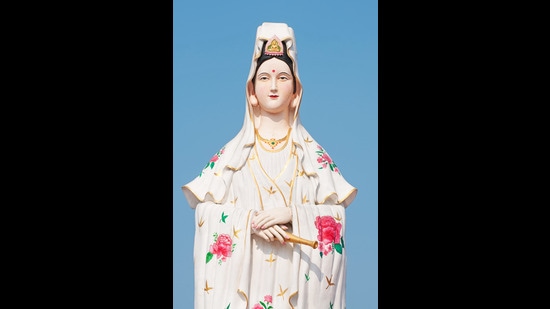
Thay remembers that she regarded like Quan Yin, the Bodhisattva of Compassion – calm, compassionate and exquisite. He struggled to share his emotions together with her. When he did, she was undecided if she understood what he meant. When he was ultimately in a position to talk clearly, Thay realized that his love “was like a storm” and that she was “being caught and carried away” in it. He writes, “She had tried to withstand, however couldn’t, and she or he lastly accepted.”
This was a troublesome time for each of them. They had been drawn to one another whereas harbouring “the deepest need to be a monk and a nun.” They'd cherished this non secular aspiration for a very long time, and didn't need to veer away from the trail, however love had certainly caught them unawares. In one of many poems that got here out of this troubled mind-set, he writes, “Spring has come/ to each nook of the ten instructions. /Its tune, alas, is simply the tune/ of departure.”
Thay clarifies that this was not sexual attraction, and that he by no means felt like holding her palms and even kissing her on the brow. He noticed her because the embodiment of all that he cherished – compassion, loving kindness, peace, reconciliation. He notes that what he felt was “sacred”, due to this fact, “holding her hand or kissing her on the brow would have been a violation.” It's transferring to learn in regards to the heavy coronary heart with which they embraced for the primary and final time.
The monk and the nun went their separate methods. Thay recited her title when he missed her, and he additionally wrote letters. Over time, he was in a position to remodel these emotions by way of his observe, and increase the love to incorporate all of the monastics and lay those that he supported. He writes, “When you're caught within the notion of a self, an individual, a residing being, or a life span, you can't perceive the character of my real love, which is reverence, belief, and religion.”
This story is highly effective as a result of it reveals a non secular chief working by way of a difficult scenario – acknowledging the sturdy pull of his emotions, and in addition being steadfast with respect to his monastic vows. Would the nun have informed the identical story otherwise? Possibly. Maybe not. Thay has not written this guide to influence lay practitioners to go for celibacy, or to depict sexuality as sinful. His intention is just to foreground how sturdy the currents of affection could be, how they will unsettle us, what they will educate us, and the way we will love properly.
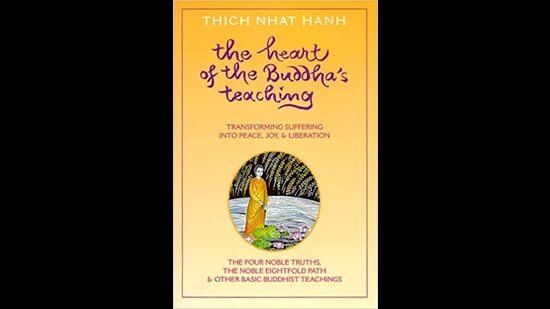
In a guide titled The Coronary heart of the Buddha’s Educating (1998), Thay writes about how love can change into possessive with out upeksha. It's a Sanskrit phrase, generally translated as equanimity or non-attachment. He writes, “A summer season breeze could be very refreshing; but when we attempt to put it in a tin can so we will have it solely for ourselves, the breeze will die. Our beloved is identical.” This perception rings true for me, and I think for a lot of others too.
Thay factors out how individuals rob their beloved of freedom. They use the beloved to fulfil all of their very own wants, up to a degree the place this individual feels imprisoned. This, in line with him, isn't loving; it's destroying, because it reveals no regard for the beloved’s wants and difficulties. This recommendation sounds notably helpful for individuals who compel or guilt their companions into having intercourse. Thay writes, “Loneliness can't be alleviated simply by the approaching collectively of two our bodies, except there may be additionally good communication, understanding, and loving kindness.”
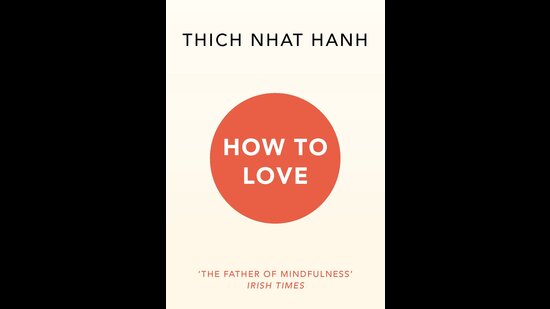
He returns to this topic with an in depth exposition in his guide How To Love (2014). He invitations us to learn to supply happiness. The start line is to have it for oneself. That is the place mindfulness is available in – not solely on the cushion however whereas ingesting tea, sitting, consuming, strolling, having fun with nature, and listening to individuals who need to share their struggling. His view of providing happiness doesn't contain fixing anybody; it's about presence and acceptance.
He writes, “Your struggling is her struggling. Your understanding of your personal struggling helps the one you love to endure much less. Struggling and happiness are now not particular person issues. What occurs to the one you love occurs to you. What occurs to you occurs to the one you love.” These remarks are grounded within the idea of “interbeing”, which challenges standard concepts of a stable, separate, independently present self that's at warfare with the whole lot exterior.
He quotes from Antoine de Saint-Exupery, creator of The Little Prince (1942), who wrote, “Love doesn't consist in gazing at one another however in trying outward in the identical path.” Thay has a humorous spin on this picture. He writes, “When two individuals endure and look in the identical path, it's usually the path of the tv.” He presents steering on cultivating the braveness to show off the tv, and to make time to pay attention and communicate to one another.
He writes in regards to the observe of “flower watering”, which is predicated on the view that each individual has each flowers and rubbish inside them so we should water the flowers in our beloved and never convey them extra rubbish. If flowers don’t develop properly, we handle them. We attempt to perceive how a lot water and sunshine they should develop, and act accordingly.
Thay makes use of examples that might resonate with anybody who's or has been romantically concerned with somebody or married. He factors out how we find yourself talking “clumsily” at instances and creating “inner knots in others.” Later, we do say one thing alongside the traces of “I used to be simply telling the reality”. This truth-telling is unskilful. Thay writes, “Think about every phrase rigorously earlier than you say something, in order that your speech is ‘proper’ in each type and content material.”
I may determine my very own behaviour patterns after I learn his ideas on how we attempt to punish the individual we maintain answerable for our struggling. We not often cease to contemplate how their speech or behaviour would possibly stem from one thing that they're scuffling with. We reply to unkind speech with extra unkind speech. Thay presents a mantra that can be utilized with our family members: “Sorry, my expensive, enable me to let you know tomorrow or the subsequent day. I'm not at my finest right now. I’m afraid I’ll say issues which might be unkind. Enable me to let you know about this one other day.”
He advocates the observe of aware respiration to acknowledge and embrace anger as an alternative of combating or suppressing it, or wallowing in guilt in disgrace for holding on to anger. In keeping with Thay, solely acceptance of our emotions can launch us from being a sufferer of our anger. After we study to just accept ourselves, we progressively study the talents to just accept others too.
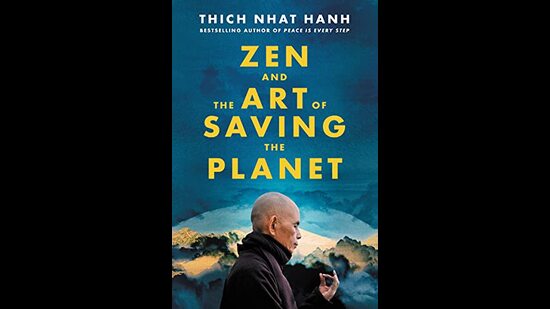
Within the guide Zen and the Artwork of Saving the Planet (2021), which was put collectively by his disciples from talks delivered over a number of years, Thay asks a pertinent query, “We don’t know who we're, so how can we anticipate the opposite individual to know?” He recommends cultivating an perspective of openness and curiosity, which will help companions perceive themselves and one another. In doing so, they will cease being afraid. They'll begin to heal.
Chintan Girish Modi is a contract author, journalist and guide reviewer.
Take pleasure in limitless digital entry with HT Premium
Subscribe Now to proceed studying

alphacominfra alphacominfra alphacominfra alphacominfra alphacominfra alphacominfra alphacominfra alphacominfra alphacominfra alphacominfra alphacominfra alphacominfra alphacominfra alphacominfra alphacominfra alphacominfra alphacominfra alphacominfra alphacominfra alphacominfra alphacominfra alphacominfra alphacominfra alphacominfra alphacominfra alphacominfra alphacominfra alphacominfra alphacominfra alphacominfra alphacominfra alphacominfra alphacominfra alphacominfra alphacominfra alphacominfra alphacominfra alphacominfra alphacominfra alphacominfra alphacominfra alphacominfra alphacominfra alphacominfra alphacominfra alphacominfra alphacominfra alphacominfra alphacominfra alphacominfra alphacominfra alphacominfra alphacominfra alphacominfra alphacominfra alphacominfra alphacominfra alphacominfra alphacominfra alphacominfra alphacominfra alphacominfra alphacominfra alphacominfra alphacominfra alphacominfra alphacominfra alphacominfra alphacominfra alphacominfra alphacominfra alphacominfra alphacominfra alphacominfra alphacominfra alphacominfra alphacominfra alphacominfra alphacominfra alphacominfra alphacominfra alphacominfra alphacominfra alphacominfra alphacominfra alphacominfra alphacominfra alphacominfra alphacominfra alphacominfra alphacominfra alphacominfra alphacominfra alphacominfra alphacominfra alphacominfra alphacominfra alphacominfra alphacominfra alphacominfra alphacominfra alphacominfra alphacominfra alphacominfra alphacominfra alphacominfra alphacominfra alphacominfra alphacominfra alphacominfra alphacominfra alphacominfra alphacominfra alphacominfra alphacominfra alphacominfra alphacominfra alphacominfra alphacominfra alphacominfra alphacominfra alphacominfra alphacominfra alphacominfra alphacominfra alphacominfra alphacominfra alphacominfra alphacominfra alphacominfra alphacominfra alphacominfra alphacominfra alphacominfra alphacominfra alphacominfra alphacominfra alphacominfra alphacominfra alphacominfra alphacominfra alphacominfra alphacominfra alphacominfra alphacominfra alphacominfra alphacominfra alphacominfra alphacominfra alphacominfra alphacominfra alphacominfra alphacominfra alphacominfra alphacominfra alphacominfra alphacominfra alphacominfra alphacominfra alphacominfra alphacominfra alphacominfra alphacominfra alphacominfra alphacominfra alphacominfra alphacominfra alphacominfra alphacominfra alphacominfra alphacominfra alphacominfra alphacominfra alphacominfra alphacominfra alphacominfra alphacominfra alphacominfra alphacominfra alphacominfra alphacominfra alphacominfra alphacominfra alphacominfra alphacominfra alphacominfra alphacominfra alphacominfra alphacominfra alphacominfra alphacominfra alphacominfra alphacominfra alphacominfra alphacominfra alphacominfra alphacominfra alphacominfra alphacominfra alphacominfra https://freecoursesite.info/essay-thich-nhat-hanh-on-love-and-intercourse/?feed_id=99911&_unique_id=627b911e05e04